How to Clean Roof Gutters Safely | Step-by-Step Guide

Clogged gutters can lead to water damage, foundation problems, and repairs that get pricey, yet many homeowners put off this maintenance task. Learning how to clean roof gutters turns this daunting chore into a manageable project you can tackle.
Gutter cleaning seems intimidating, but we’re here to show you it doesn’t have to be. We’ll walk you through the safety equipment you need, the tools required, and a step-by-step cleaning process in this piece. We’ll also cover methods for how to clean gutters without getting on roof and how to clean roof gutters without a ladder. You have options that suit your comfort level and situation.
Safety Equipment and Preparation Before Cleaning
Proper preparation separates a safe job from a potential risk when you attempt to clean roof gutters. Gather the right equipment and assess conditions to protect yourself from injury and make the whole process smoother.
Protective gear you need
Start with sturdy, slip-resistant shoes that provide good traction on ladder rungs. Wet surfaces can be treacherous, so footwear with gripping treads prevents slipping. Durable work gloves protect your hands from sharp metal edges, debris, and any animals or insects hiding in the gutters. Safety glasses or goggles shield your eyes from falling particles when you look up at overhead components. These simple items are the foundations of safe gutter maintenance and shouldn’t be skipped.
Ladder safety basics
The right ladder makes all the difference. We recommend extension ladders for both single-storey bungalows and two-storey houses rather than step ladders, which force you to stretch dangerously to one side. Your ladder must be rated for your weight plus additional load capacity.
Position your ladder using the 4-to-1 rule: for every four feet of height, place the base one foot away from the wall. This angle provides optimal stability. Never rest the ladder on the gutter, as uPVC guttering isn’t designed to support that weight. Use a ladder stand-off bracket instead that fits over the top two rungs and holds the ladder about 30cm from the wall. This accessory spreads the load and gives you better working position.
Weather conditions to check
Only clean gutters in clear, dry weather. Wind threatens ladder stability, whilst rain makes surfaces slippery and dangerous. Ensure your ladder is dry before climbing.
Ground-level gutter inspection
Walk around your property and examine the gutters from ground level before climbing. Look for visible damage, sagging sections, or areas where debris has accumulated heavily. This original assessment helps you plan your approach and identify potential problem areas.
Tools and Materials Required
The right tools reshape how you clean roof gutters and turn a frustrating ordeal into a simple task. You’ve already gathered your safety equipment. Now you’ll need specific cleaning implements to remove debris.
Simple cleaning tools
A gutter scoop serves as your main tool to remove leaves and debris. These scoops feature a curved design that fits the gutter profile and include drainage holes that let water pass through whilst retaining solid matter. Some homeowners fashion homemade versions from plastic milk jugs, though purpose-built scoops work better.
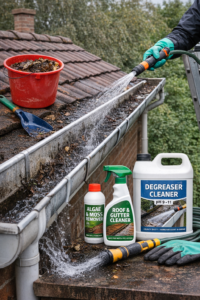
You’ll need a bucket with a carry handle to collect the debris you remove. A garden hose with a high-pressure nozzle flushes remaining dirt after scooping. Stubborn grime stuck to gutter surfaces requires a gutter brush with an extendable handle that scrubs away residue and cobwebs.
Optional equipment that makes cleaning easier
Telescopic gutter cleaning poles allow you to clean gutters without getting on roof and reach heights up to 12 metres from ground level. These poles use lightweight carbon fibre construction, with each 5-foot section that weighs around 350 grammes.
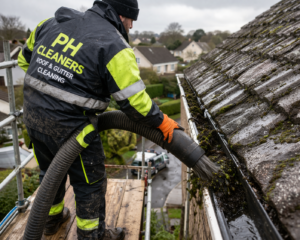
Gutter vacuum systems provide the quickest way to clean. These vacuums use strong suction to remove debris from ground level and eliminate ladder risks. Those who already own pressure washers can connect gutter cleaning attachments to their existing equipment. The Kärcher system uses a cleaning sled with backward-facing nozzles that propel it through gutters and flush debris.
What to avoid using
Never use garden rakes or shovels to clean gutters, as they damage guttering systems. Power tools require careful handling. Pressure washers and rotating agitators will ruin gutters if used without care. Avoid acidic cleaning chemicals that corrode gutter materials over time.
Step-by-Step Process to Clean Roof Gutters
Once you have your equipment and are ready, the actual cleaning process follows a step-by-step method that keeps you safe and ensures complete results.
Step 1: Position your ladder securely
Set up your ladder so the stabilisers rest above the gutter on the roof rather than on the guttering. Begin near a downspout, as this location provides a natural starting point for debris removal. Verify the ladder remains stable before climbing.
Step 2: Remove large debris by hand
Clear large debris such as leaves and twigs by hand with your gloves on. Place these materials into your bucket. This first pass removes the bulk of accumulated matter and prevents items from clogging your vacuum or scoop.
Step 3: Scoop out smaller debris
Use your gutter scoop or garden trowel to remove compacted debris that won’t come out by hand. Work along each section and scrape the bottom and sides of the gutter channel. Empty your scoop into the bucket often to maintain a clear working space.
Step 4: Flush gutters with water
Fit your garden hose with a spray nozzle and flush the remaining dirt from the gutters. Start at the far end and work towards the downspout. A strong stream clears lingering particles, but avoid spraying underneath roof shingles.
Step 5: Check and clear downspouts
Run water through the downspout to test flow. If water backs up into the gutter, you have a blockage. Try tapping on the downspout as you descend the ladder one rung at a time. Stubborn clogs may require a handheld auger fed into the downspout opening and turned clockwise.
Step 6: Inspect for damage or leaks
Check for standing water in the gutters once you finish cleaning. Gutters should slope 1/4-inch for every 10 feet towards the downspout. Examine seams and corners for leaks. Look for rust patches, sagging sections, or gutters pulling away from the roofline.
How to Clean Gutters Without Getting on Roof
Not everyone feels comfortable working at height, and you don’t need to climb onto your roof to maintain gutters. Several ground-level methods allow you to clean gutters without getting on roof and achieve professional results.
Using extension poles from the ground
Telescopic gutter cleaning poles extend up to 310 centimetres. This enables you to reach roof gutters from ground level. These systems feature curved brush heads with hard nylon bristles that reach difficult areas and remove leaves and debris from drainage systems. The 90-degree brush head design adapts to various heights and inaccessible spots. The adjustable length suits different cleaning environments. You work by extending the pole to match your gutter height. Move the brush head along the gutter channel to dislodge accumulated matter.
Gutter cleaning attachments for hoses
Pressure washer systems offer powerful cleaning from ground level. The Kärcher system uses a cleaning sled placed in the gutter and connected to your pressure washer with a 20-metre high-pressure hose. Two nozzles on the sled’s underside eject water backwards. This propels the sled forward and flushes debris. Garden hose attachments, known as gutter cleaning wands, connect to standard hoses and direct water flow to push debris towards downspouts. Water pressure dislodges stubborn dirt, making this method the quickest way to flush thoroughly.
Leaf blower method without a ladder
Leaf blower gutter kits transform your existing blower into a ground-level cleaning tool. Extension tubes attach to handheld blowers and extend beyond ten feet. This provides sufficient reach for most residential gutters. The EGO gutter attachment measures 8.3 feet in length with an adjustable nozzle. Worx kits offer 11-foot reach and weigh only 2.6 pounds. These work best on dry days, as wet debris sticks together and resists air flow. Wear goggles, as the blower throws debris into the air.
Conclusion
Gutter maintenance protects your home from water damage and repairs that get pricey. The task becomes straightforward once you have the right safety equipment and tools. You can climb a ladder or use ground-level methods. We’ve shown you multiple approaches that suit your comfort level. Choose the method that works best for your situation and make gutter cleaning part of your home maintenance routine to prevent future problems.
FAQs
Q1. Safety precautions
Wear non-slip shoes, gloves, and safety glasses. Work only in dry weather. Use a stable ladder (4:1 rule) and keep 3 points of contact. Avoid top 3 rungs.
Q2. Basic tools
Gutter scoop, bucket, garden hose with nozzle, and extendable brush for stubborn dirt.
Q3. Cleaning without ladder
Use telescopic poles, hose attachments, or leaf blower kits to clean safely from the ground.
Q4. Blocked downspout
Flush with water. If clogged, tap the pipe or use a drain auger to clear blockage.
Q5. What to avoid
Don’t use rakes or harsh chemicals. Be careful with pressure washers. Never place ladder on gutters.